
PolicyGenii — Agents Earn Their Authority. Task by Task.
Every other approach hands an agent a set of permissions and hopes it stays inside them. PolicyGenii does the opposite: agents get no execution through the gateway without valid authority, propose the authority a task actually needs, and negotiate a scoped, time-bounded contract — which deterministic code, not an AI, then enforces.
What PolicyGenii Is
PolicyGenii is the "Mother May I" layer of the AgentGenii Suite. An agent describes the access it needs for a specific task; PolicyGenii evaluates that request against your policies, can push back with a narrower scope, and — after the required approval — issues a signed, time-bounded contract that deterministic checks enforce on every governed call. Because no model is involved in enforcement, the approved bounds cannot be talked around: a request beyond them is refused or escalated, never argued into existence. Patent provisional filed April 2026.
Core Capabilities
- No execution through the gateway without valid signed authority; agents request scope per task
- PolicyGenii can suggest a narrower scope before authority is approved and signed
- Contracts are enforced deterministically by the gateway and PolicyGenii's native evaluator (OPA on the legacy path) — no AI in the loop
- Governed requests, approvals, and calls are cryptographically attributable, with coverage checked during review
Least privilege, negotiated and signed.
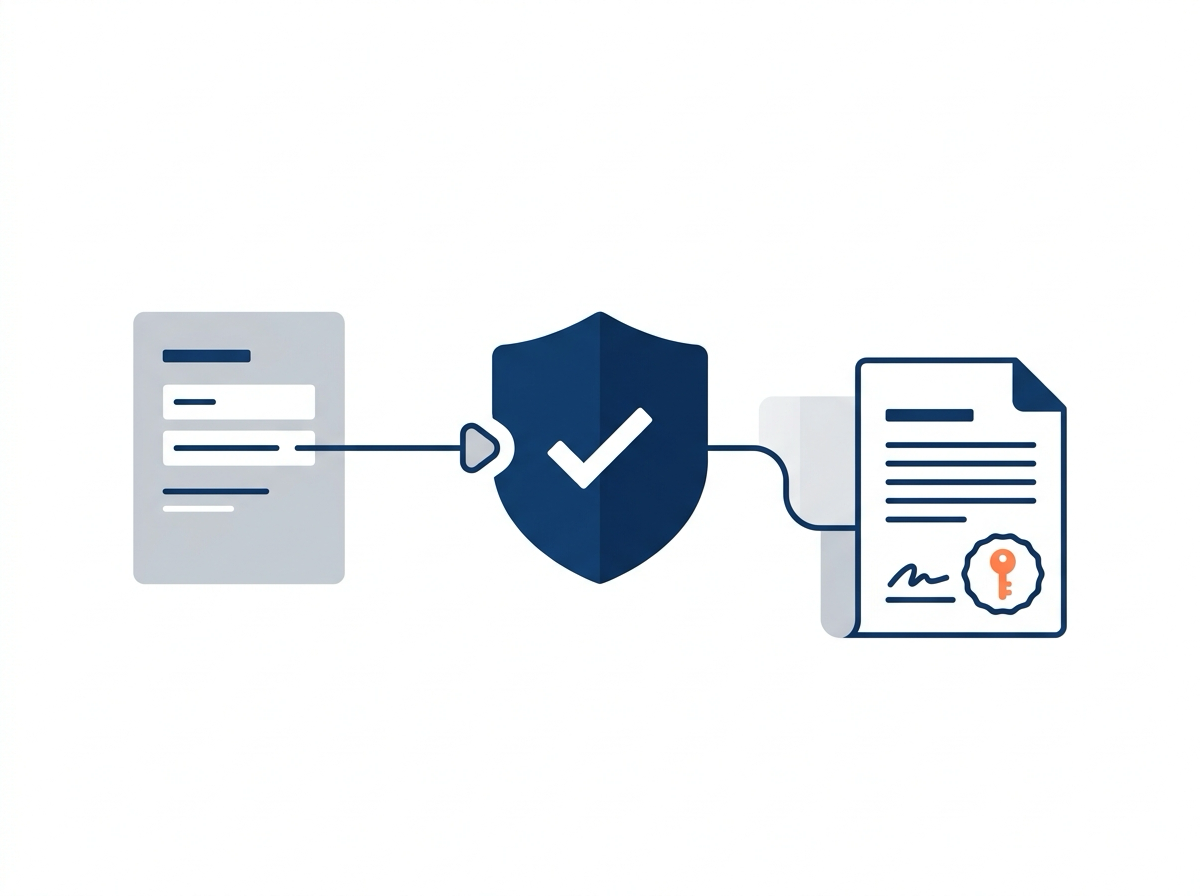
An agent requests access; PolicyGenii evaluates it and can suggest a narrower scope; after the required approval a time-bounded contract is signed, and a deterministic gate — not an AI — enforces it.
- No execution through the gateway without valid signed authority; agents request scope per task
- PolicyGenii can suggest a narrower scope before authority is approved and signed
- Contracts are enforced deterministically by the gateway and PolicyGenii's native evaluator (OPA on the legacy path) — no AI in the loop
Built to compose with the rest of Autom8ly’s Genii.
PolicyGenii decides what an agent may do. ComplianceGenii sets the outer bounds from your regulatory policy; KnowledgeGenii governs what the agent knows; CipherGenii protects data within its configured confidentiality boundary.
Explore Autom8ly solutionsCore Use Cases
Granting AI agents least-privilege access without static, brittle RBAC
Passing CISO and AI-council review with pre-execution, signed authority contracts
Containing blast radius — through the gateway, an agent cannot touch what it did not negotiate
Producing cryptographic audit artifacts for EU AI Act, NIST AI RMF, and SOX